

Itinerary timeline
Pará is an Amazonian food and culture powerhouse with Belém at its center, Marajó at the river-sea interface, and Alter do Chão far west near Santarém. These are separate trips unless the itinerary includes a domestic flight.
Start with the route
Give Belém three days and add two nights on Marajó or an island near the capital. Alter do Chão and Santarém need a separate flight or multi-day boat journey and should not be sold as a Belém day trip.
Pará at a glance
| Planning question | Useful answer |
|---|---|
| Region | North Brazil |
| Easiest first base | Belém |
| Best second base | Soure or Salvaterra |
| Route style | Markets, Amazonian cuisine, river islands, music, colonial architecture, ceramics, and travelers who organize days around heat and rain. |
| Route decision | Marajó |
Choose a base
Base: Belém
Essential for Ver-o-Peso, museums, food, architecture, and river-island day trips.
Base: Soure or Salvaterra
Main Marajó bases, reached by boat plus local road transfer depending on the service.
Base: Santarém or Alter do Chão
A separate western Pará route for Tapajós river beaches and forest communities.
For a first trip, Belém and Soure or Salvaterra make the clearest pair. Before splitting the stay, map the journey from Belém to Soure or Salvaterra door to door: pickup point, luggage rules, expected arrival, and the return connection.
What to see
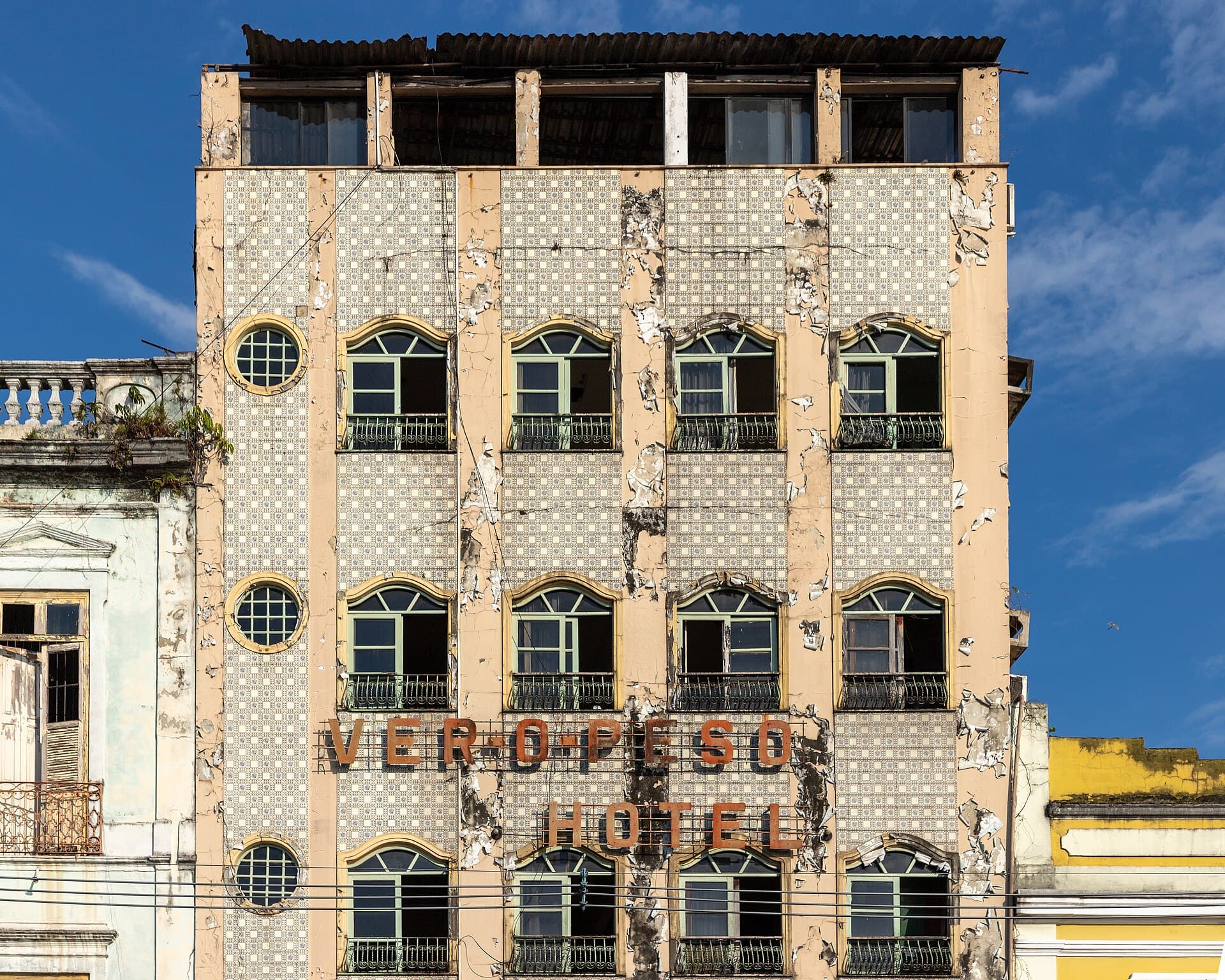
Ver-o-Peso
Go early with curiosity and restraint: fish, herbs, fruit, farinha, and prepared foods reveal Pará's ingredient system. Ask before photographing vendors and do not treat medicinal claims as medical advice.
Feliz Lusitânia and Cidade Velha
The fort, cathedral area, museums, and streets around the city's foundation create a compact historic circuit. Check individual museum days.
Ilha do Combu
A short river crossing can connect forest, cacao, and riverside meals. Choose a known boat service and a producer visit that explains who grows and processes the cacao.
Marajó
The immense island has buffalo culture, ceramics, beaches, mangroves, and archaeological depth. Two nights are a minimum orientation, not a complete circuit.
Five-day itinerary
The outline below uses Belém and Soure or Salvaterra as its planning bases. Read the day sequence before adding Marajó; it shows whether that decision belongs inside these five days or needs a separate itinerary.
| Day | Base or focus |
|---|---|
| 1 | Ver-o-Peso and Cidade Velha |
| 2 | Museums, basilica, and neighborhood food |
| 3 | Combu or another river island |
| 4 | Transfer to Marajó |
| 5 | Marajó culture and return |
A late arrival in Belém should count as check-in rather than a sightseeing day. Protect the return from Soure or Salvaterra instead of squeezing another stop into the final transfer.
Day 1: Ver-o-Peso and Cidade Velha
Visit the market early, eat a regional breakfast, and continue into Feliz Lusitânia before afternoon rain. Save room for tacacá later.
Day 2: Museums, basilica, and neighborhood food
Choose two cultural institutions, visit the Basílica de Nazaré respectfully, and explore food beyond the market.
Day 3: Combu or another river island
Use an established crossing, learn about cacao or riverside production, and return before a tight evening commitment.
Day 4: Transfer to Marajó
Confirm boat terminal and onward transfer, settle in Soure or Salvaterra, and take a short orientation with a local guide.
Day 5: Marajó culture and return
Choose ceramics, a buffalo-farm context, mangroves, or beach according to conditions. Add another night if the return would connect directly to a flight.
Extend the route without breaking it
If you add nights to Pará, use them to resolve the main route decision: Marajó. If the Pará day-by-day plan already covers that decision, slow the transfer and add recovery time; otherwise, give the extension its own arrival, useful day, and return.
Food and drink
Pará cuisine uses tucupi, jambu, manioc leaves, farinha, river fish, dried shrimp, and forest fruit with extraordinary confidence. Several ingredients are invisible in the finished dish, especially shrimp and nuts. Ask specific questions, and understand that açaí with fish is a main meal, not a novelty challenge.
| Look for | What to know |
|---|---|
| Tacacá | A hot tucupi broth with goma, jambu, and shrimp, commonly eaten from a cuia in the late afternoon. |
| Pato no tucupi | Duck served in tucupi with jambu, especially associated with Círio season but available in specialist restaurants. |
| Maniçoba | Manioc leaves cooked for days with meats; eat it from an experienced kitchen because proper processing is fundamental. |
| Açaí paraense | Thick, minimally sweetened açaí eaten with farinha and fish or shrimp as part of a meal. |
| Filhote | Firm Amazon catfish used in grilled plates, caldeirada, and filé preparations. |
| Caruru and vatapá paraense | Local versions appear in festival and street-food contexts and differ from Bahian preparations. |
| Cupuaçu, bacuri, and taperebá | A trio of tart, aromatic fruits found in juices, ice creams, sweets, and sauces. |
In Pará, restaurant names and prices age quickly. Use Tacacá, Pato no tucupi, and the other dishes above as menu reference points rather than fixed venue recommendations.
When to go
Belém is hot, humid, and rainy, often with strong afternoon showers. River beaches near Santarém emerge according to water level. Marajó road and field conditions also change with rain.
Conditions can differ across Pará. Check the forecast for each travel day and verify current access, transport, and any booking or guide requirements for Marajó separately.
Getting around
Belém has air, road, and river connections. Boats depart from different terminals for different islands, and vessel type changes journey time significantly. Confirm the exact terminal, boat, baggage setup, and arrival transport.
Calculate the full cost from Belém to Soure or Salvaterra, including pickup, luggage, waiting time, and the return.
What to confirm before booking
- Current access, opening days, and guide requirements for Ver-o-Peso.
- The complete transfer between Belém and Soure or Salvaterra, including the return.
- Current access, transport, and any booking or guide requirements for Marajó.
- Road, river, tide, fire, and weather conditions that could change this Pará route.
How this guide was checked
StopOver built this Pará route from a structured destination profile. For Pará, automated checks cover formatting, repeated prose, commercial recommendations, and time-sensitive claims. This Pará article is neither a field report nor a source-checked guide. Access to Ver-o-Peso remains on the freshness list. StopOver also monitors current access, transport, and any booking or guide requirements for Marajó. Confirm each item before booking.
Common questions
What is the most practical first base?
The five-day outline starts in Belém and treats Soure or Salvaterra as its second base. Travelers focused on Soure or Salvaterra should compare direct arrival and transfer options before adding a night in Belém.
What should a short trip leave out?
Remove the stop with the weakest connection to Belém and Soure or Salvaterra. For a five-day Pará trip, test Marajó first and keep it only when the day-by-day transport and return buffer still work.