

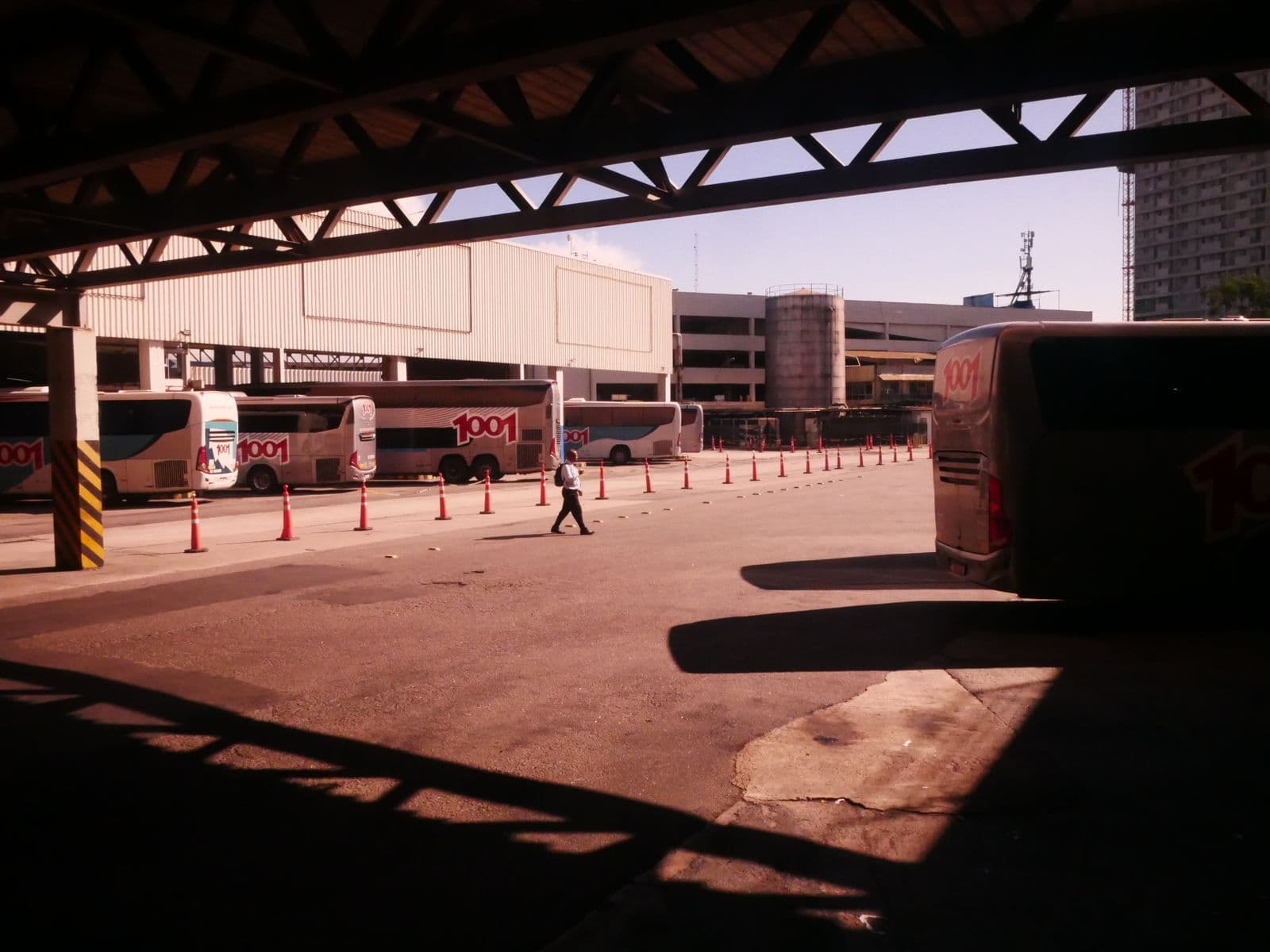
The short answer: For a regular interstate bus, start with ANTT’s official schedule query, then buy through the authorized carrier or its stated channel. Match the origin, destination, exact boarding point, date, passenger document, baggage, and service conditions. Calculate the journey door to door and keep a recovery option; a city name and a reseller’s headline are not enough evidence.
This guide focuses on regular interstate road passenger service. The ANTT passenger portal says ANTT regulates and supervises regular interstate and international collective road transport with fixed authorized routes, schedules, and official boarding points. A route wholly within one state, a municipal bus, a charter, a tourism transfer, or an informal ride can have a different regulator and legal structure. Identify the service type before applying these rules.
Verify that the route and operator are legitimate
Use ANTT’s linked official schedule query to look for the exact origin, destination, and date. The tool is evidence that a regular interstate schedule is in the federal system; it is not a live guarantee that inventory remains for sale. Continue to the carrier’s official site, ticket office, or channel identified by the carrier and confirm current operation.
At the time checked, ANTT’s current passenger guidance tells travelers to use authorized companies and official carrier channels, warning that clandestine transport does not provide the regulated protections. A third-party platform can be a seller, but verify who the transport operator is, who issues the ticket, how support works, and where refund or change requests go before paying.
Save:
- carrier and seller legal or trading name;
- route, date, departure, and stated arrival;
- complete terminal or official boarding-point name and address;
- whether the itinerary is direct, has intermediate stops, or changes vehicle;
- seat and service description;
- total payable amount and conditions;
- carrier contact and the confirmation or ticket number.
Confirm the exact terminal at both ends
Large cities can have more than one terminal or authorized point. Do not translate “São Paulo,” “Rio,” or another city label into a terminal by assumption. Copy the boarding and arrival point from the ticket and confirm it with the carrier or terminal’s official channel.
Then add hotel-to-terminal and terminal-to-hotel travel to the route budget. Check whether your planned local transport operates at the arrival time and can accommodate the party and luggage. An overnight service is not a saved hotel night if it creates an unsafe wait, inaccessible transfer, or unusable arrival day.
Compare the actual service, not the class name
Terms such as convencional, executivo, semi-leito, and leito are commercial descriptions whose seat layout and amenities can vary. Inspect the carrier’s current vehicle or service details for the ticket being sold. Ask:
- Is the route direct or are there scheduled stops?
- Does this itinerary change buses?
- What seat and recline are shown for the assigned vehicle?
- Are toilet, charging, blanket, water, or meal claims part of the contract?
- Can the operator substitute a vehicle, and what conditions then apply?
- What assistance is available at boarding, stops, transfers, and arrival?
Do not publish or plan around a generic travel duration. Use the current scheduled duration shown by the carrier, then add terminal access, boarding, stops or changes, arrival pickup, and recovery time.
Match the ticket and travel document
Enter the traveler’s name and document exactly as the carrier requires. ANTT’s current guidance says passengers aged 12 or older must present an official photo ID for regulated interstate travel and advises confirming child and adolescent documents with the carrier. Foreign travelers, families, unaccompanied minors, and anyone using a digital document should confirm what is accepted for that exact trip before purchase.
Keep the ticket and accepted original or digital document accessible without depending on terminal Wi-Fi. The independent-travel Portuguese phrase guide can help with ordinary questions, but it is not a substitute for the carrier’s document decision or official rules.
Apply the current interstate baggage rules carefully
ANTT’s official guidance, checked on the date below, says a passenger on the regulated service may carry up to 30 kilograms in the luggage compartment plus 5 kilograms in the overhead parcel space without an extra charge, and that the company must provide proof for checked baggage. Those are official regulatory allowances, not a recommendation to pack to the limit.
Confirm the carrier’s size, safety, prohibited-item, and special-equipment rules. Arrange bicycles, boards, instruments, mobility equipment, medical items, pets, or unusual loads in advance. Keep identity documents, essential medication, valuables, and necessary assistive items with you where safely permitted rather than in the lower hold.
Label checked luggage and retain its receipt. ANTT’s June 2026 guidance says baggage loss or damage should be reported and gives the operator up to 30 days to pay compensation after the complaint is registered. Report a problem immediately through the official channel and preserve the ticket, tag, photographs, and communications.
Plan connections from consequences, not optimism
Never turn the scheduled arrival into a guaranteed connection. For an onward bus, flight, boat, tour, or lodge pickup, record:
- current scheduled arrival and exact terminal;
- the onward service’s real deadline;
- transfer distance and method;
- whether tickets are separate;
- the last acceptable alternative on the same date;
- where you can stay and how you will travel if the connection fails.
If the onward segment is rare or nonrefundable, compare an earlier bus, a recovery night, a different route order, or a flight. Use the same evidence standard in the domestic-flight connection guide and multi-region itinerary guide.
Know the currently published delay and change rights
ANTT’s official December 2025 guidance, updated in 2026 and checked below, currently says:
- for delay of more than one hour, passengers can choose to continue, use an equivalent company, or receive the ticket value;
- when a carrier-responsible delay exceeds three hours, food and, when needed, lodging are guaranteed;
- a passenger who withdraws can request a refund by notifying the carrier at least three hours before departure;
- the ticket remains valid for one year, subject to the conditions of the contracted service for changes or transfer.
The agency’s June 2026 explainer also says that if a bus is more than one hour late or the trip is not operated, the company must offer relocation or a full refund, and it directs unresolved complaints to official channels.
These statements describe the federal regular interstate service and the official pages as checked on August 28, 2026. They do not decide every fact dispute or replace the current regulation and ticket conditions. If a problem occurs, contact the carrier first, keep evidence and receipts, and recheck ANTT’s current guidance.
Use a final purchase gate
Do not buy until every answer is documented:
- ANTT’s schedule tool or the relevant regulator supports the route type.
- The authorized operator, seller, and support channel are identifiable.
- Exact boarding and arrival points match the intended local transfers.
- Passenger name and accepted document are confirmed.
- Stops, vehicle changes, service, and baggage terms are understood.
- Accessibility and special-equipment needs are confirmed with the carrier.
- The door-to-door result is better for this trip than the available flight or other route.
- A dated alternative or overnight recovery plan exists.
Recheck the carrier and terminal before departure. Schedule, boarding point, vehicle, and operating conditions can change after this article’s source review.
If something goes wrong
Use the carrier’s official customer-service channel and record the protocol. ANTT’s June 2026 explainer then points to Consumidor.gov.br and, if the issue remains unresolved, ANTT’s official channels including free telephone 166, the agency’s ombudsman, and Fala.BR. Use the current ANTT passenger portal to reach those channels rather than a number copied from an undated third-party page.
Sources checked
Desk research only; Stopover did not ride, book, inspect, or endorse any carrier or route. No human or field review is claimed. Official pages were checked August 28, 2026:
- Passageiros — ANTT; regulatory scope, service types, official boarding points, schedules, and passenger-information links.
- Quadro de Horários — ANTT; official regular-service schedule query.
- Direitos e Deveres — ANTT; passenger rights and duties hub.
- Viagem tranquila começa com informação: os direitos do passageiro no transporte interestadual — ANTT, June 15, 2026; current purchase, baggage, delay, and complaint guidance.
- Vai viajar de ônibus? Conheça seus direitos garantidos por lei — ANTT, published December 24, 2025 and updated June 9, 2026; current authorized-carrier, document, baggage, delay, refund, and ticket-validity guidance.