

The short answer: Add nights in Belém for markets, museums, urban heritage, and the food culture of the Amazon estuary. Choose Marajó when you have a verified boat plan and want an island extension connected to Belém. Choose Alter do Chão only when you can treat Santarém and the Tapajós as a separate western Pará trip. It is not a casual add-on to the capital.
The Pará first-time travel guide gives the full state framework. Use the Pará destination page to move between that overview and this decision article.
Start with the distance problem
Pará's map tempts travelers to place Belém, Marajó, and Alter do Chão in one neat sequence. They sit in different travel systems. Belém is the main eastern urban gateway. Marajó is reached through water and road combinations that depend on the chosen island base. Alter do Chão is near Santarém, far to the west, and its practical gateway is Santarém rather than Belém.
Visit Brasil's current Alter do Chão page places the village roughly 38 kilometers from Santarém and around 1,300 kilometers from Belém. That one fact should stop the common planning error. A flight or long river journey between the two regions needs its own day, baggage plan, and recovery margin.
Marajó looks closer because official visitor information names Belém's water terminal as an access point, but "Marajó" is not one dock. Decide whether the actual base is Soure, Salvaterra, or another municipality, then verify every stage to that address. A generic ticket to the island does not prove that the final road transfer works with your arrival.
Keep extra Belém nights when culture is the priority
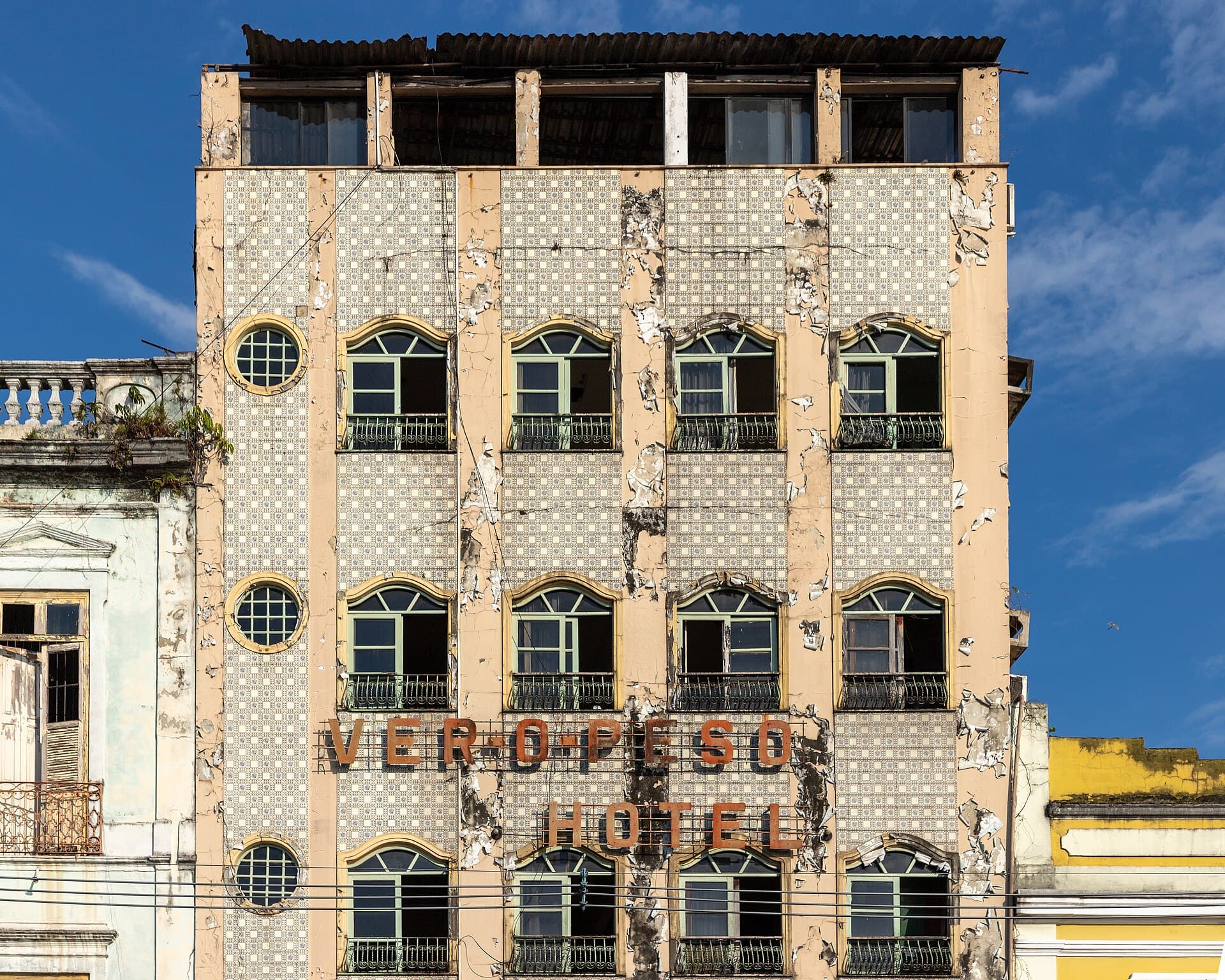
Belém rewards concentration. Iphan's 2026 city heritage page identifies protected areas in Cidade Velha and Campina and names the Ver-o-Peso complex, religious buildings, squares, and the old port-city fabric. Those places work as a connected cultural route when opening days and heat are handled sensibly.
Use an early period for Ver-o-Peso and the surrounding market landscape. The market is a working place, so ask before close-up photography and stay out of vendors' way. Do not reduce the visit to unusual ingredients. Notice how river products, fish, fruit, herbs, transport, and daily commerce fit together.
Later, select one museum or heritage interior with verified access. Two unhurried institutions usually teach more than a rapid list of façades. Build the day by walking distance and shade, and use a ride when flood rain, heat, or mobility makes the apparent map route unreasonable.
Extra Belém time is also the easiest option when the rest of the trip contains fixed transport. You remain near the main airport and can move activities without jeopardizing a boat or distant lodge booking. Keep at least one indoor alternative for heavy rain or an unexpected closure.
Choose Marajó only after naming the island base
Visit Brasil's Ilha de Marajó page identifies Belém as the principal air gateway and the city's hydrographic terminal as a boat reference. It also presents the island through its landscapes and Marajoara culture. That is useful orientation, not a complete ticket chain.
Before booking accommodation, obtain written answers to these questions:
- Which vessel and terminal serve the chosen base on the travel date?
- Does the journey include a road segment after disembarkation?
- Is luggage handled by the passenger, crew, or a separate vehicle?
- What is the last workable connection to the lodging?
- What happens when weather or mechanical issues cancel a departure?
Allow at least three nights if you want two useful days rather than a transfer in, one compressed tour, and a transfer out. Seasonal water and rain can change beaches, roads, mosquitoes, and activity options. Ask the host what current conditions mean for the exact municipality instead of seeking one universal "best month" for the entire island.
Marajoara culture is living and diverse. Buy ceramics or attend cultural activities through makers and recognized community channels. Ask before photographing people or religious practices. Archaeological objects are not souvenirs, and an attractive origin story from a seller is not proof of lawful provenance.
Make Alter do Chão a Santarém-based journey
Alter do Chão belongs in a western Pará plan. Fly or arrive in Santarém, protect that arrival, and then transfer to the village. The official Visit Brasil page explains that the freshwater beaches become prominent during the lower-water period, while lagoons, flooded forest, riverside communities, and other activities can shape different months.
Do not book based only on a photograph of Ilha do Amor or a sandbar. Ask what the river level currently exposes, whether a boat is needed, where it boards, and what an alternative day looks like. Water conditions change the landscape without making one season automatically worthless.
Community-based activities along the Tapajós and Arapiuns need direct, current arrangements. Verify who hosts the visit, how the community manages group size, what is included, and how photography works. A commercial intermediary should be able to name the host and explain where payment goes.
For a short trip, keep the village and one responsibly arranged river or forest activity. Adding several distant communities, a long trek, and repeated boat transfers turns a restorative base into a logistics exercise.
Match the choice to available nights
Use this practical minimum as a planning screen, not a promise:
| Available time after arrival in Pará | More coherent choice |
|---|---|
| One or two nights | Stay in Belém and deepen the city route |
| Three or four nights from Belém | Consider one named Marajó base after transport is confirmed |
| Four or more nights plus a separate Santarém arrival | Build an Alter do Chão and Tapajós stay |
The table assumes that arrival and departure times are usable. A late flight does not count as a Belém culture day, and an evening arrival in Santarém may not support an onward village activity. Write the trip as nights and full usable periods rather than destination names.
If you want both Marajó and Alter do Chão, give each its own transport buffer and ask whether splitting the state across two flights serves the purpose of this trip. Returning later for the other region is often the more honest answer.
Verify every water segment
For ferries, speedboats, excursion vessels, and community transfers, record the vessel type, official departure point, passenger check-in, baggage rule, flotation equipment, and cancellation process. These services are not interchangeable. A public transport crossing does not provide the same itinerary or support as a private nature excursion.
Do not infer safety from a busy terminal or a polished sales page. Use an official terminal or tourism channel where available, then confirm the operator and exact service. If accessibility matters, ask about boarding height, gangways, seating, toilets, and assistance on the actual vessel.
Finally, keep the return before a flight conservative. Separate tickets and independent boat services can leave the traveler responsible for a missed connection. An overnight near the departure gateway may cost less than losing the next journey.
Sources checked
Desk research only; no Stopover editor has tested these transfers or visited the markets, islands, boats, or communities for this article. Official sources were read on August 29, 2026:
- Belém (PA) - Iphan; current protected-city context for Ver-o-Peso, Cidade Velha, Campina, and related heritage.
- Ilha de Marajó - Visit Brasil; official destination orientation and principal gateway references.
- Alter do Chão - Visit Brasil; official location, seasonal landscape, community-tourism, and access overview.
- Patrimônio Imaterial no Pará - Iphan; cultural references associated with Belém, Marajó, Santarém, and traditional practices.