

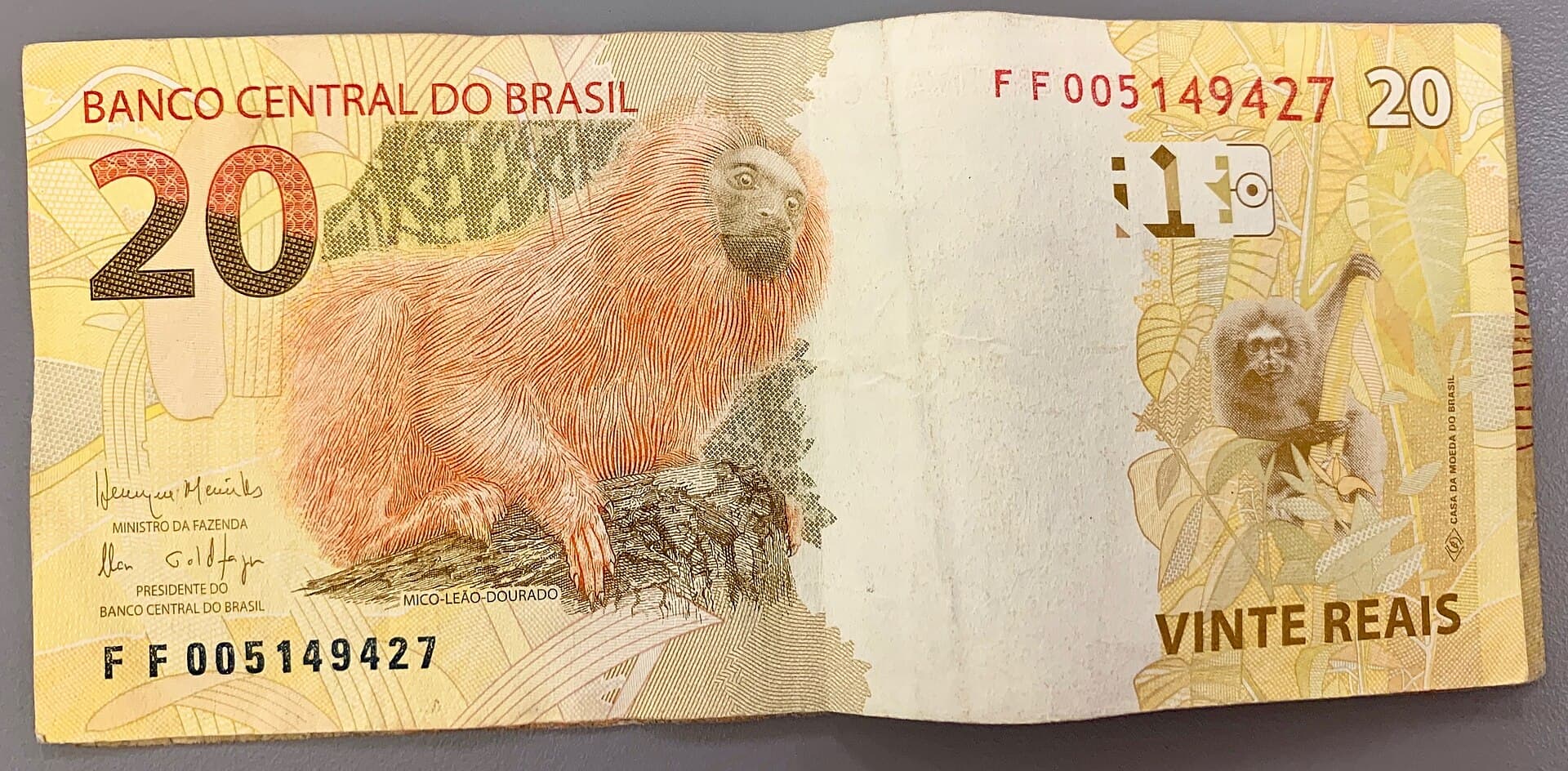
The short answer: Price the route you will actually take in Brazilian reais (BRL), record the final payable amount for each fixed booking, and convert the total into your home currency using one documented planning rate. Keep flexible daily spending, payment fees, and contingency on separate lines. If the plan only works with a perfect exchange rate or the cheapest nonrefundable quote, simplify it before booking.
A national “cost per day” cannot represent a city break, an interstate bus route, and a remote lodge. This guide is a calculation method. It deliberately provides no hotel, meal, flight, or activity price because those values depend on exact dates, inventory, location, party size, and purchase terms.
Build one budget with three layers
Separate the workbook into:
- Fixed route costs: transport, accommodation, required activities, visas or documents when applicable, insurance, and booked transfers.
- Flexible trip costs: local transport, meals, water, laundry, data, optional activities, and personal spending.
- Protected capacity: payment and conversion costs plus an amount reserved for disruption or an extra night.
Do not use the food line to disguise a route that contains too many long transfers. If the fixed layer is already unaffordable, return to the multi-region itinerary test before adjusting daily spending.
Price transport from door to door
For every flight or bus, copy the final checkout quote, not the first search-result price. Record:
- operating carrier and seller;
- origin and destination airport or terminal;
- departure and arrival date;
- fare, mandatory charges, and chosen extras;
- baggage required for this traveler;
- airport or terminal transport at both ends;
- any accommodation or meal created by the schedule;
- refund, change, and missed-connection conditions.
The ANAC passenger portal separates offer and purchase, baggage, changes, and disruption topics. Use it with the operating airline’s contract; do not assume two fares include the same baggage or flexibility. For regulated interstate buses, the ANTT passenger hub links to the official schedule tool and passenger-rights information. Our flight connection guide and bus guide show what to capture before the quote enters the budget.
Use the accommodation total, not the nightly headline
Create one row per stay. Copy the complete amount for the required dates and occupancy, then note what is included. Check taxes or fees shown at checkout, breakfast, cancellation deadline, deposit, payment timing, accessibility needs, reception hours, and whether the location creates recurring local-transport costs.
Keep per-room, per-person, per-bed, and per-property prices distinct. A mathematically correct spreadsheet can still be wrong when units are mixed. Do not treat a named property as endorsed merely because its quote appears in a planning worksheet.
Research flexible spending in each base
Create a small basket for every base rather than one Brazil-wide daily allowance. Your rows might include a typical breakfast choice, main meal, groceries or water, local transport, and one optional activity. Enter values from current menus, official fare tools, or direct provider quotes and record the check date.
Use three scenarios:
- Committed: already booked or unavoidable.
- Expected: the realistic choices you currently intend to make.
- Optional: removable without breaking the trip’s purpose.
This makes budget cuts explicit. It also prevents a free day from being averaged against an expensive anchor activity in a way that hides the cash actually needed on that date.
Choose and label one planning exchange rate
The Banco Central do Brasil currency converter is useful for a dated reference conversion, but its own notice says the calculation is informational, uses the previous business day for non-business dates, and does not replace the actual terms of a currency transaction.
Add these columns to every non-BRL funding line:
| Amount in BRL | Planning rate | Home-currency estimate | Rate date | Quote/provider | Final cost known? |
|---|---|---|---|---|---|
Use one consistently labeled rate for planning; do not silently update half the workbook. The eventual card, cash, transfer, or withdrawal conversion can differ from the reference rate.
Compare the total payment cost, not just the exchange rate
For a currency-exchange transaction covered by Brazilian rules, Banco Central’s VET explanation says the Valor Efetivo Total combines the exchange rate, tariffs, and taxes and lets a customer compare the effective cost. When obtaining BRL through an exchange provider in Brazil, check the provider in Banco Central’s current regulated-institution lookup and ask for the applicable final terms and receipt.
For cards, withdrawals, or an account outside Brazil, ask the issuer or provider—not this blog—about foreign-transaction charges, cash-advance treatment, ATM/operator fees, conversion choice, limits, holds, and dispute procedures. Put any known amount in the payment-cost layer. If a cost is unknown, label it unknown rather than entering zero.
Treat Pix as account access, not a universal tourist feature
Pix is Brazil’s instant-payment system. Banco Central’s current Pix participants page explains that financial and payment institutions offering transaction accounts participate under defined conditions and provide the end-user experience. Therefore, do not assume a foreign card or ordinary overseas bank account can originate Pix. Confirm whether your own regulated provider supplies Pix access, under what identity and account requirements, and at what cost.
Even if Pix is available, keep a second lawful payment method. Do not build a route around a merchant accepting one method until that merchant confirms the current payment terms.
Set contingency from named failure cases
Choose a protected amount by pricing plausible recovery actions for this route. Examples include:
- one additional night in a critical transfer city;
- a replacement same-route transport option visible for the travel date;
- ground transport after a changed arrival point;
- prescribed medication or essential-item replacement under appropriate professional advice;
- the loss of a nonrefundable optional activity.
This is not an invitation to predict that a disruption will happen. It is a solvency test: can the traveler recover without using money committed to food, accommodation, or the return journey? Record the chosen amount and the scenarios it covers. Do not apply an unexplained “reasonable percentage.”
Use a worksheet that exposes missing evidence
| Date/base | Item | Quantity and unit | BRL quote | Included/excluded | Source and check date | Fixed, expected, optional, or protected |
|---|---|---|---|---|---|---|
| Accommodation | room / nights / guests | Fixed | ||||
| Long-distance transport | passenger / segment | Fixed | ||||
| Local transport | ride / pass / day | Expected | ||||
| Meals | person / meal | Expected | ||||
| Anchor activity | person or group | Fixed | ||||
| Optional activity | person or group | Optional | ||||
| Recovery capacity | named scenario | Protected |
Then calculate:
route total in BRL = fixed + expected + known payment costs + protected capacity
Keep optional spending outside the minimum viable total. Convert the result with the labeled planning rate, and compare it with the funds actually available after ordinary obligations at home. This guide does not provide financial advice or decide what amount is affordable for an individual traveler.
Stress-test with live alternatives
Replace the most fragile quote with a real, currently visible alternative—not an invented percentage. Recalculate after removing the cheapest fare, changing a nonrefundable stay to a flexible one, or adding the actual baggage needed. If the route becomes unaffordable, reduce bases, change dates, or postpone an optional anchor before paying.
Save the final quote, terms, check date, and confirmation for each fixed item. Recheck unpaid items before their deadline. Prices and exchange conditions can change after this source ledger was checked.
Sources checked
Desk research only; Stopover did not test any payment product, exchange counter, fare, hotel, or itinerary. No human or field review is claimed. Official pages were checked August 28, 2026:
- Conversor de Moedas — Banco Central do Brasil; informational dated currency conversion and its limitations.
- O que é Valor Efetivo Total (VET)? — Banco Central do Brasil; components and comparison purpose of VET.
- Encontre uma instituição regulada/supervisionada pelo BC — Banco Central do Brasil; current lookup for authorized, regulated, or supervised institutions.
- Participants — Banco Central do Brasil; Pix institutional participation and transaction-account context.
- Passageiros — ANAC; official air-passenger purchase, baggage, changes, and disruption topics.
- Passageiros — ANTT; official regular interstate bus scope, schedules, and passenger-information hub.