

Itinerary timeline
Bahia combines Salvador's Afro-Brazilian heritage, the Recôncavo's historic towns, a very long coastline, and the mountains of Chapada Diamantina. These are separate travel zones. A first visit becomes much better once you choose one region instead of treating the state as a beach checklist.
Start with the route
For five days, pair Salvador with Cachoeira and São Félix in the Recôncavo, or pair Salvador with one nearby coast. Chapada Diamantina, Itacaré, Morro de São Paulo, and the far south each deserve additional nights.
Bahia at a glance
| Planning question | Useful answer |
|---|---|
| Region | Northeast Brazil |
| Easiest first base | Salvador |
| Best second base | Cachoeira |
| Route style | Afro-Brazilian history and culture, music, street food, colonial architecture, beaches, and hiking on a longer second route. |
| Route decision | Cachoeira and São Félix |
Choose a base
Base: Salvador
Essential for Pelourinho, Barra, Rio Vermelho, markets, museums, and the state's deepest cultural context.
Base: Cachoeira
A strong Recôncavo base for history, religious traditions, and a slower riverside rhythm.
Base: Lençóis
The main independent base for Chapada Diamantina, best treated as a separate itinerary.
For a first trip, Salvador and Cachoeira make the clearest pair. Before splitting the stay, map the journey from Salvador to Cachoeira door to door: pickup point, luggage rules, expected arrival, and the return connection.
What to see
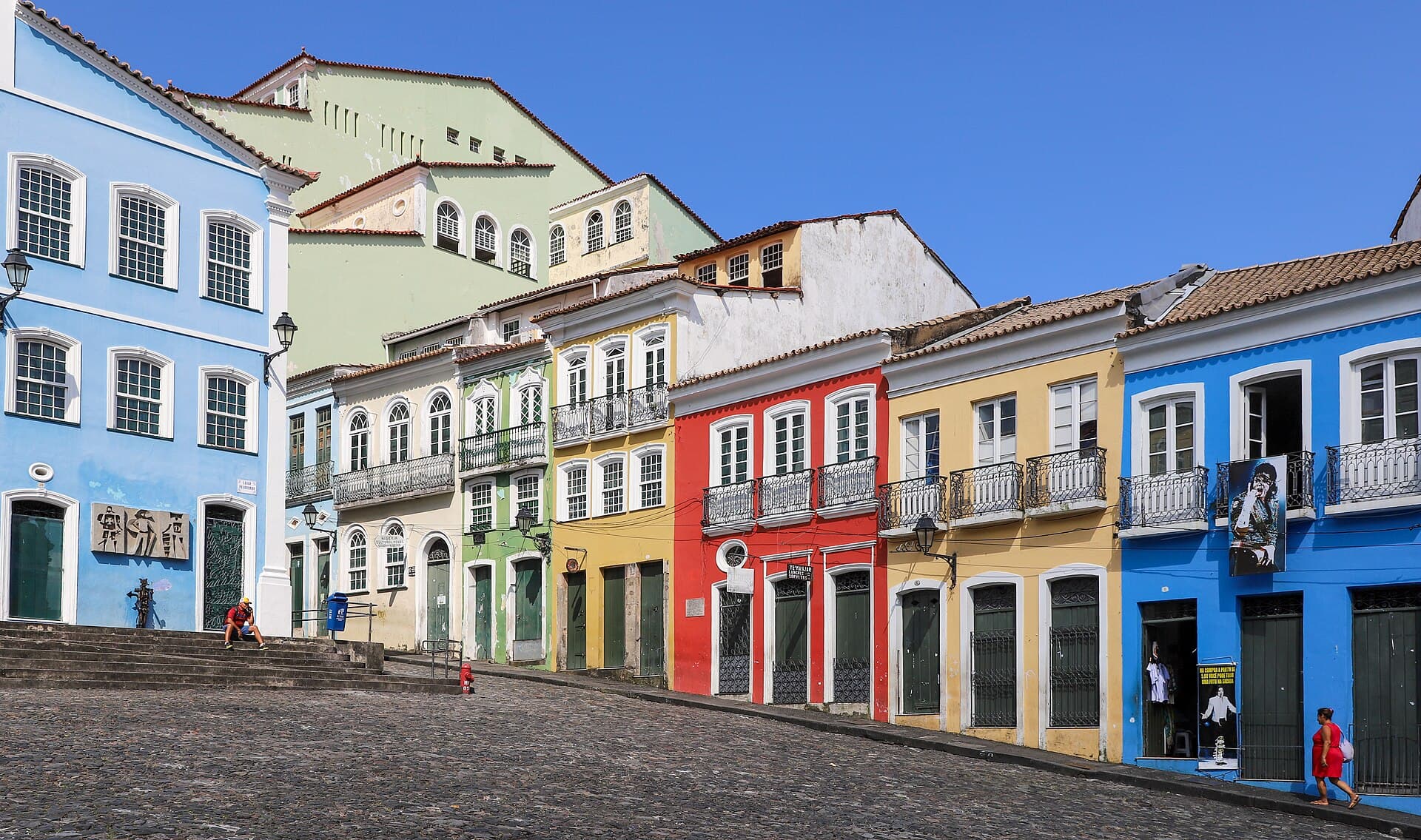
Pelourinho and the historic center
Go beyond colorful facades: connect Terreiro de Jesus, churches, museums, and sites interpreting Afro-Brazilian history. Use a guide for context and choose routes appropriate for the time of day.
Barra and the Bay of All Saints
Farol da Barra and Porto da Barra reveal Salvador's relationship with the bay and Atlantic. Sunset is popular; swimming conditions and crowds should be assessed on the day.
Rio Vermelho and food culture
The neighborhood is known for acarajé and nightlife, but it is also a useful place to discuss the work and cultural significance of baianas de acarajé. Ask before photographing vendors.
Cachoeira and São Félix
The sister towns across the Paraguaçu River hold important architecture, samba de roda, and Candomblé history. Religious spaces and ceremonies require invitation and respect, not tourist entitlement.
Five-day itinerary
The outline below uses Salvador and Cachoeira as its planning bases. Read the day sequence before adding Cachoeira and São Félix; it shows whether that decision belongs inside these five days or needs a separate itinerary.
| Day | Base or focus |
|---|---|
| 1 | Pelourinho with context |
| 2 | Lower City and Barra |
| 3 | Markets and Rio Vermelho |
| 4 | Cachoeira and São Félix |
| 5 | Return through the Recôncavo |
A late arrival in Salvador should count as check-in rather than a sightseeing day. Protect the return from Cachoeira instead of squeezing another stop into the final transfer.
Day 1: Pelourinho with context
Start in the historic center with a knowledgeable guide, prioritizing Afro-Brazilian history and a few carefully chosen interiors. Finish before fatigue turns the steep streets into a chore.
Day 2: Lower City and Barra
Visit the Bonfim area and Ribeira or the Mercado Modelo vicinity, then continue to Barra. Check current elevator, museum, and church access rather than assuming a fixed sequence.
Day 3: Markets and Rio Vermelho
Use Feira de São Joaquim with local guidance, rest during the hottest hours, and go to Rio Vermelho for acarajé and an evening meal.
Day 4: Cachoeira and São Félix
Travel to the Recôncavo, walk both river towns, and stay overnight if possible. A day trip is feasible, but an evening and morning reveal more than a fast bus turnaround.
Day 5: Return through the Recôncavo
Visit one additional cultural site with confirmed access, then return to Salvador with traffic margin. Travelers wanting beaches should add days rather than swap this for a distant coast sprint.
Extend the route without breaking it
If you add nights to Bahia, use them to resolve the main route decision: Cachoeira and São Félix. If the Bahia day-by-day plan already covers that decision, slow the transfer and add recovery time; otherwise, give the extension its own arrival, useful day, and return.
Food and drink
Bahian food cannot be separated from West African diasporic knowledge, Candomblé food traditions, Indigenous ingredients, and Portuguese colonial history. Dendê, dried shrimp, coconut, peanuts, and cashews are common hidden allergens. Read the dedicated allergy guide before assuming a dish can simply be made “without shrimp.”
| Look for | What to know |
|---|---|
| Acarajé | A black-eyed-pea fritter fried in dendê oil and filled to order, often with vatapá, caruru, salad, and shrimp. “Quente” may refer to chili heat, so clarify. |
| Abará | A seasoned black-eyed-pea batter steamed in banana leaf; it shares accompaniments with acarajé but has a softer texture. |
| Moqueca baiana | Fish or seafood cooked with coconut milk, dendê, peppers, onion, and herbs, normally served with rice, farofa, and pirão. |
| Vatapá | A rich preparation using bread or flour, coconut milk, peanuts or cashews, dendê, and often shrimp; recipes and allergen profiles vary. |
| Caruru | Okra cooked with dendê and seasonings, frequently part of a larger Bahian plate and linked to religious food traditions. |
| Xinxim de galinha | Chicken cooked with dendê, shrimp, nuts, and aromatics; ask about shellfish and nut ingredients. |
| Cocada | Coconut sweet ranging from soft and spoonable to firm bars, with white, burnt-sugar, and fruit versions. |
In Bahia, restaurant names and prices age quickly. Use Acarajé, Abará, and the other dishes above as menu reference points rather than fixed venue recommendations.
When to go
Bahia spans multiple climate zones. Salvador can receive rain at any time, Chapada has trail and waterfall conditions that vary with rainfall, and coast quality depends on wind and sea conditions. Plan for the exact subregion, not a single statewide forecast.
Conditions can differ across Bahia. Check the forecast for each travel day and verify current access, transport, and any booking or guide requirements for Cachoeira and São Félix separately.
Getting around
Salvador is the principal gateway. Ferries and catamarans serve different destinations and are weather-dependent; buses and transfers cover the coast and interior. Historic Salvador is walkable in sections but steep, while cross-city journeys can be slow.
Calculate the full cost from Salvador to Cachoeira, including pickup, luggage, waiting time, and the return.
What to confirm before booking
- Current access, opening days, and guide requirements for Pelourinho and the historic center.
- The complete transfer between Salvador and Cachoeira, including the return.
- Current access, transport, and any booking or guide requirements for Cachoeira and São Félix.
- Road, river, tide, fire, and weather conditions that could change this Bahia route.
How this guide was checked
StopOver built this Bahia route from a structured destination profile. For Bahia, automated checks cover formatting, repeated prose, commercial recommendations, and time-sensitive claims. This Bahia article is neither a field report nor a source-checked guide. Access to Pelourinho and the historic center remains on the freshness list. StopOver also monitors current access, transport, and any booking or guide requirements for Cachoeira and São Félix. Confirm each item before booking.
Common questions
What is the most practical first base?
The five-day outline starts in Salvador and treats Cachoeira as its second base. Travelers focused on Cachoeira should compare direct arrival and transfer options before adding a night in Salvador.
What should a short trip leave out?
Remove the stop with the weakest connection to Salvador and Cachoeira. For a five-day Bahia trip, test Cachoeira and São Félix first and keep it only when the day-by-day transport and return buffer still work.