
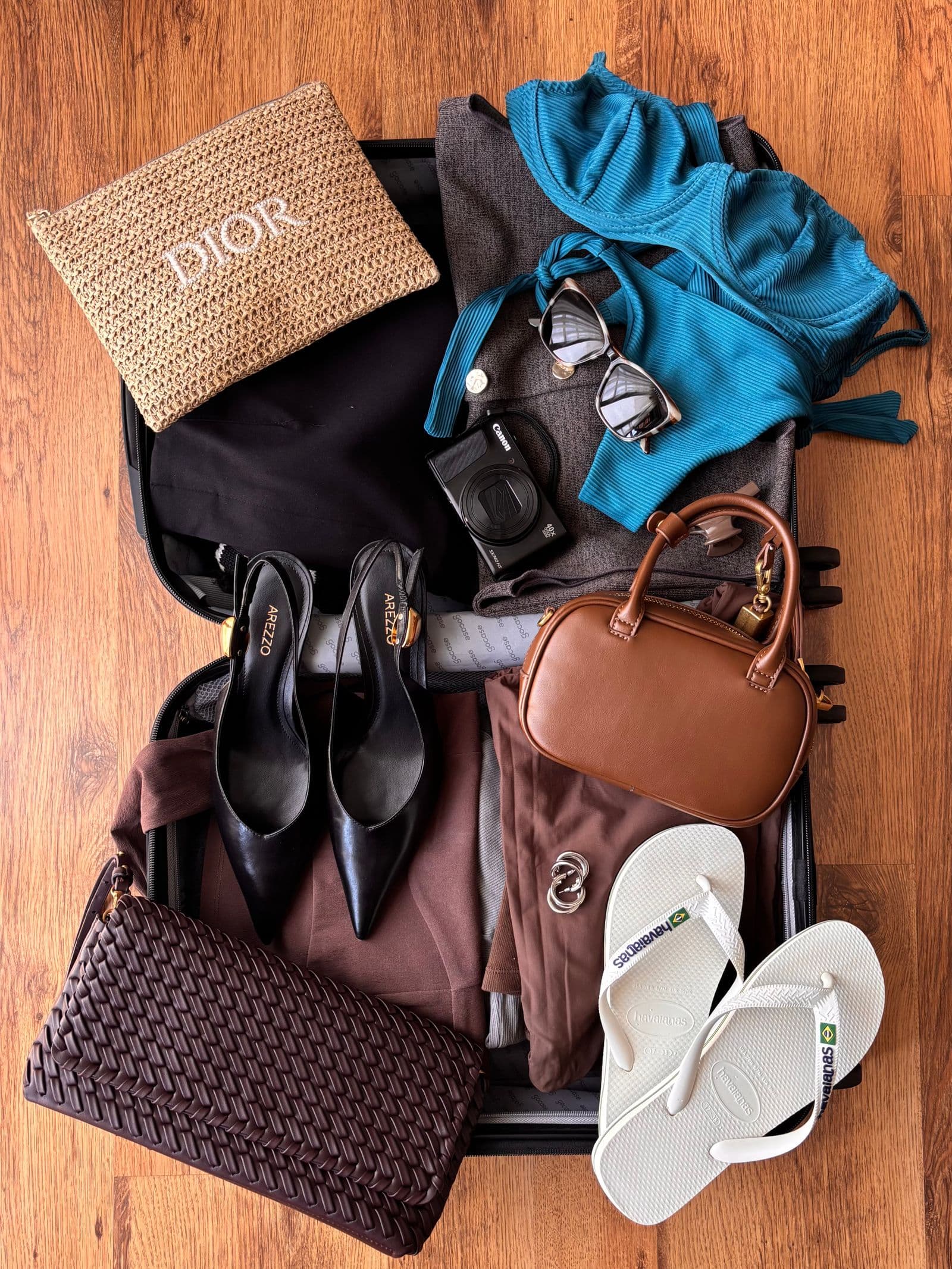
Packing for tropical Brazil is an exercise in moisture management, sun protection, and moving comfortably between air-conditioned interiors and hot streets. The right list depends on whether the trip is urban, coastal, Amazonian, or trail-based; no one needs a costume labeled “tropical traveler.”
The core clothing system
- Four or five breathable tops that can be hand-washed.
- Two lightweight trousers or skirts and two pairs of shorts suited to the setting.
- One light long-sleeve layer for sun, insects, and strong air conditioning.
- One compact rain shell or umbrella for urban travel; a shell is better for boats and trails.
- Underwear and socks that dry overnight.
- Swimwear plus a cover-up appropriate for moving away from the beach.
- One presentable outfit for restaurants, religious sites, or cultural events.
Loose fabric is not automatically cool if it holds water. Test quick-dry claims at home. Dark heavy cotton can become uncomfortable after one humid walk, while very thin fabric may provide poor sun protection.
Footwear
Bring a broken-in walking shoe or sandal with secure heel support, plus a simple second pair. Flip-flops work for showers and short beach use but are poor choices for cobbles, long city days, sharp reef areas, or muddy trails. Ask a park or operator whether closed shoes are mandatory before buying hiking boots.
Rain and waterproofing
Use a small dry bag or waterproof pouch for passport, phone, and medication. A pack cover alone does not protect contents when water runs behind your back or luggage sits on a wet boat floor. Separate damp clothing in a reusable waterproof bag and dry it as soon as possible.
For itinerary design, read the rainy-season travel guide. Clothing cannot rescue a schedule that has no indoor alternative.
Sun and heat
Pack a hat with real coverage, sunglasses, a refillable bottle, and sunscreen you already tolerate. Buy additional sunscreen locally only after checking the product and size. Plan shade and water stops rather than treating sun protection as a product-only problem.
Insects
Repellent, long sleeves, and accommodation screens each solve different parts of the problem. Use products according to their label and seek current professional travel-health advice for the exact destination. Do not rely on scented bracelets, social-media mixtures, or one generic Amazon claim.
Electronics and documents
- Phone with offline maps and copies of reservations.
- Compact power bank accepted by your airline in cabin baggage.
- Charging cable plus one backup.
- Plug adapter confirmed for Brazil's Type N sockets and local voltage.
- Passport and required documents in original form, plus separate copies.
- A written emergency contact and accommodation address.
Brazil uses both 127V and 220V depending on location and sometimes building. Check the appliance label and ask the accommodation; a plug adapter does not convert voltage.
What to add for specific routes
Beach: rash guard, dry pouch, light towel if accommodation does not provide one, and reef-safe behavior regardless of marketing claims.
Amazon or Pantanal lodge: only the gear list confirmed by the lodge, often including neutral long clothing, a headlamp, dry storage, and closed shoes.
City: discreet day bag, compact umbrella, and clothing suitable for museums and restaurants.
Multi-day hike: operator-specified water capacity, pack weight, bedding, and footwear; do not extrapolate from a city list.
What to leave home
Avoid excessive “just in case” gear, camouflage clothing, expensive jewelry, a new untested shoe, large bath products, and prohibited tools. Laundry once during the trip is usually lighter and cheaper than hauling another week of clothing.
Final 24-hour check
Read airline cabin-baggage rules, the exact destination forecast, accommodation laundry details, and the operator gear list. Wear the bulkiest useful shoes in transit and keep one complete change of clothing in carry-on baggage.