
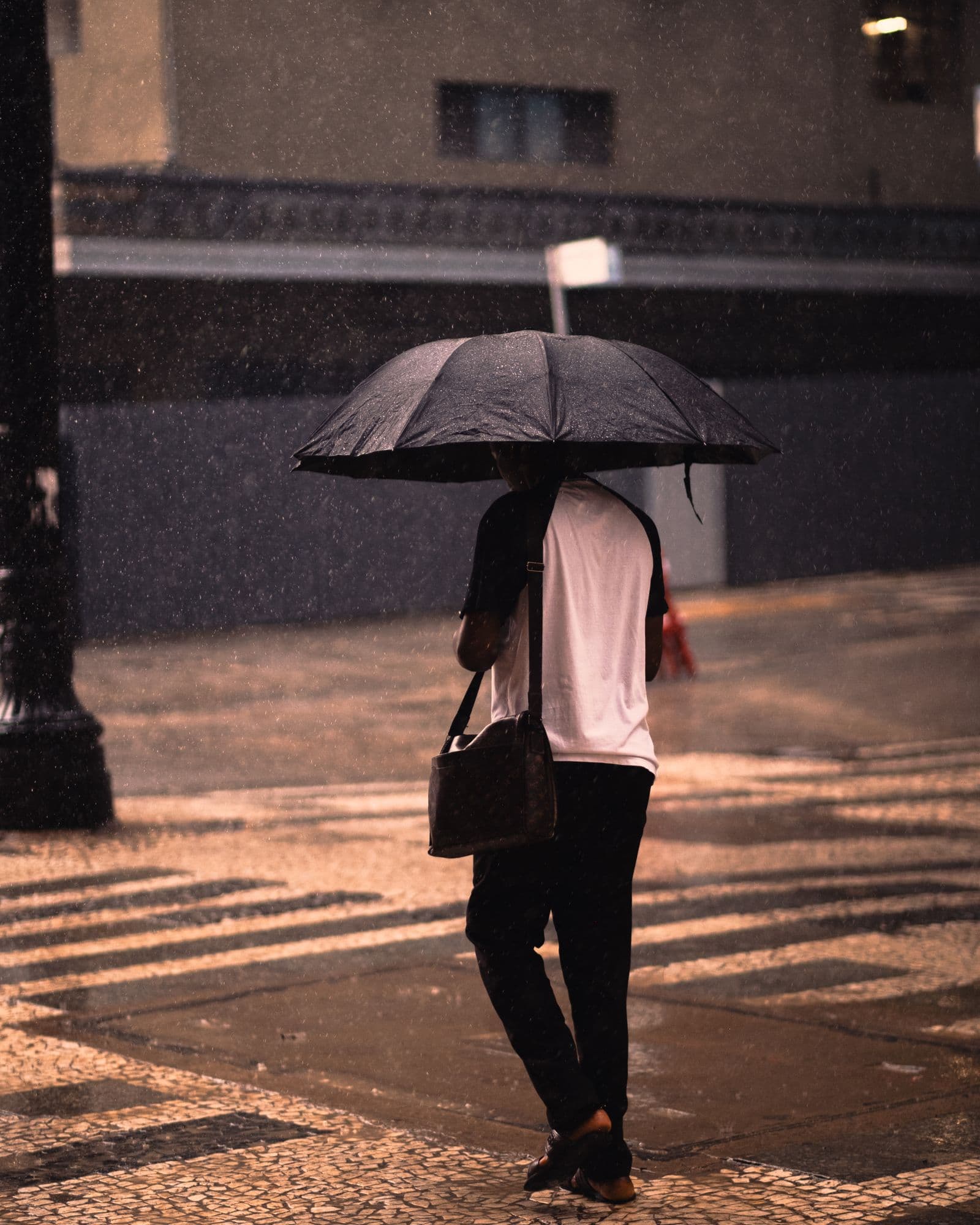
“Rainy season” in Brazil does not mean one national calendar or continuous rain every day. Belém's afternoon downpour, a Rio summer storm, a cerrado road becoming muddy, and prolonged coastal rain create different travel problems. Plan for the exact municipality and activity.
Separate rain probability from trip impact
A museum day survives rain; a canyon, dirt-road transfer, reef pool, waterfall swim, or small-aircraft flight may not. Mark every activity as low, medium, or high weather sensitivity. Reserve flexible terms for the high-impact items and place them early enough to retry.
Build paired days
For every outdoor anchor, assign one indoor or all-weather alternative in the same transport zone. A São Paulo museum should replace another central activity, not a rural waterfall three hours away. A market, food workshop, historic interior, or neighborhood route can be a primary experience rather than filler.
Read the hourly pattern
Daily icons hide timing. Look at hourly rain, lightning, wind, and accumulated rainfall, then ask local operators what recent weather has done to roads, rivers, trails, lagoons, and visibility. Yesterday's rain may matter more than today's forecast.
Road and trail consequences
Unpaved roads can become impassable, and waterfalls can rise after rain far upstream. Cliffs and slopes may become unstable. Check park closures, fire and flood alerts, and operator decisions. Never pressure a guide to continue because the activity is prepaid.
Accommodation decisions during wet periods
Choose a base with covered food options, reliable access, a place to dry clothing, and staff who can communicate road or boat changes. Ask whether the access street floods and whether reception remains staffed after delayed transport. A remote cabin can be excellent in stable conditions but a poor rainy-season base when every meal and activity depends on the same vulnerable road. Flexible cancellation is most valuable on the night before the weather-sensitive segment, not only at the first city hotel.
Coast and boat consequences
Rain alone does not determine a boat cancellation: wind, swell, lightning, tide, and visibility matter. Heavy rain can also reduce reef visibility and affect bathing quality near drainage outlets. Pair this guide with the safer beach-day checklist.
Pack for recovery
- Lightweight rain shell or compact umbrella appropriate to the route.
- Waterproof document and phone pouch.
- Separate bag for wet clothing.
- Quick-dry layers and a second pair of footwear.
- Medication protected from heat and moisture.
- Power bank and offline addresses.
The complete clothing systems are in the tropical packing list and Southern Brazil packing list.
Booking terms to ask about
- Who decides weather cancellation?
- Is the activity moved, refunded, or replaced?
- How late is the decision communicated?
- Does transport still operate if the activity closes?
- Can accommodation dates move without penalty?
- Is travel insurance documentation required for a claim?
Save the answer in writing. “We always go” is a warning sign for weather-sensitive nature activities.
Protect arrival and departure
Do not schedule a remote road, boat, or trail return immediately before an international flight. Add a buffer night near the departure gateway. On a multi-region itinerary, weather risk compounds with every connection; use the multi-region planning guide.
A useful daily routine
Check official alerts at breakfast, confirm the primary activity, move the alternative into the same bag, and reassess before entering a remote zone. After a major storm, ask about conditions rather than assuming blue sky means the route recovered.
The objective is not to defeat weather. It is to retain a valuable day when the original plan is no longer safe or enjoyable.