
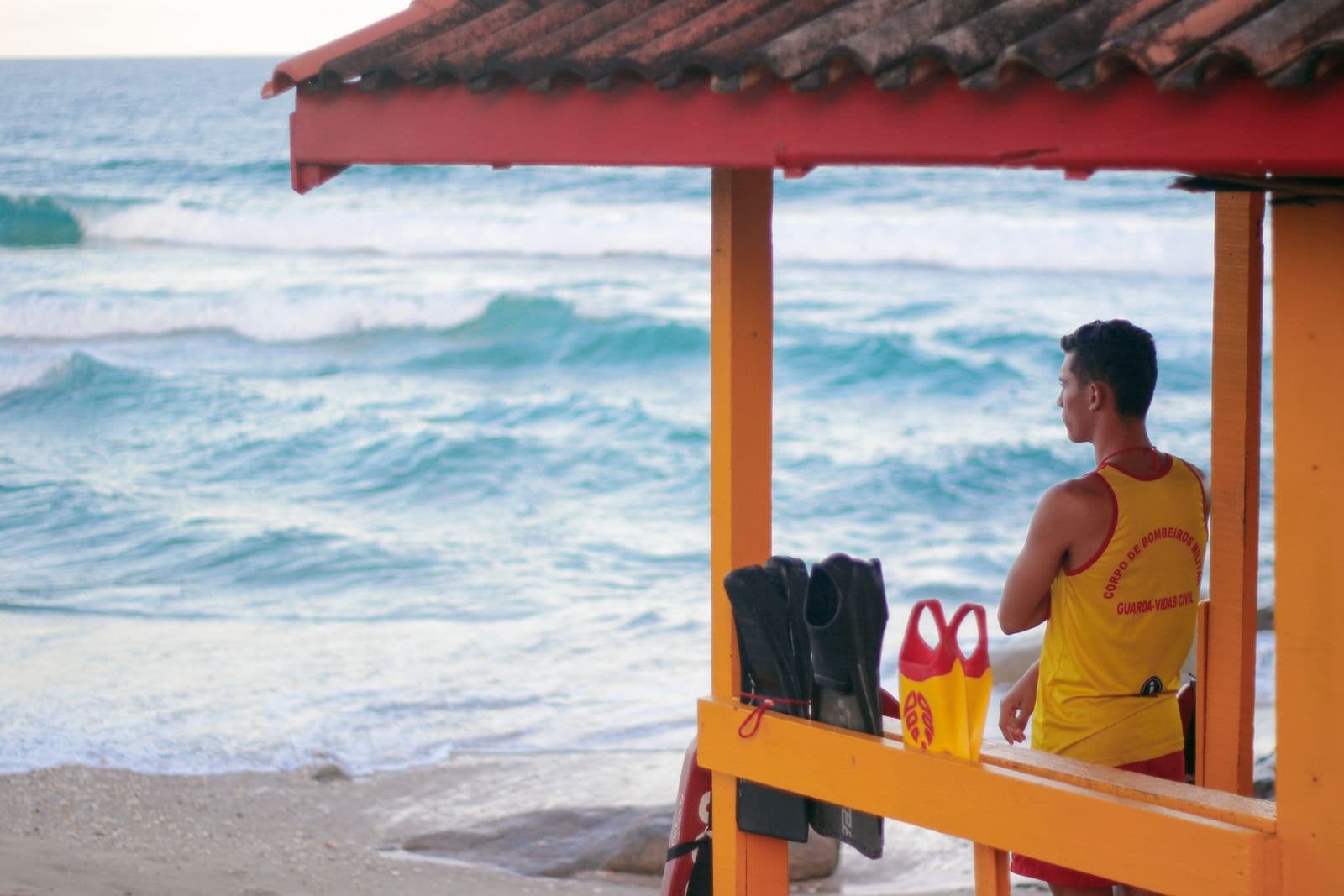
Brazilian beaches range from protected urban bays to ocean-facing surf, reef pools, mangroves, dunes, and remote coves. A safer day begins by reading the exact beach rather than assuming warm water means easy swimming.
Check four conditions
- Surf and current: ask lifeguards where swimming is recommended and recognize that calm-looking gaps in breaking waves can indicate rip currents.
- Tide: reef pools, sandbanks, cave passages, and walking routes can disappear quickly as water rises.
- Water quality: follow current municipal or state bathing-quality notices after heavy rain and near river outlets.
- Weather: lightning, strong wind, and offshore storms can make water and boat trips unsafe before rain reaches the sand.
Use official local forecasts and tide data, then confirm conditions with lifeguards or authorized operators on arrival.
Choose your swimming zone
Swim near staffed areas and within any flags or signs. Ask what the local flag colors mean; do not assume an international standard is applied identically. If caught in a rip current, established safety guidance generally emphasizes staying calm, floating, signaling, and moving parallel to shore rather than exhausting yourself against the flow, but learn current local instructions from lifeguards.
Children and weak swimmers need active, close supervision even in shallow water. Inflatable toys can drift offshore and do not replace flotation equipment designed for safety.
Tide pools and reefs
Book only at an appropriate low tide with an authorized local operator. Do not stand on coral, collect organisms, feed fish, or use fins where they strike the reef. Water clarity depends on wind, rain, and sediment; a responsible operator should cancel or offer an alternative when conditions are poor.
Wildlife is not a beach prop
Keep distance from nesting birds, turtles, dolphins, seals, and any animal resting on sand or rock. Do not move an animal, pour water over it, or gather a crowd for photographs. Notify a lifeguard, protected-area team, or recognized rescue organization when intervention may be needed. The responsible wildlife guide explains how to assess boat and observation operators.
Sun and heat
Bring water, shade, clothing coverage, a hat, and sunscreen you tolerate. Reapply according to the product label and after swimming. Plan the longest walk outside peak heat, especially on treeless dunes and cliffs. Alcohol and dehydration make swimming decisions worse.
Valuables
Carry only what the day needs. Use a small waterproof pouch for key and payment, take turns swimming, or use a legitimate locker. Hiding a phone under a towel is not security. Keep the accommodation address offline and separate from the only phone.
Remote beach checklist
- Is there mobile coverage or a known emergency contact?
- Can the access trail be completed in both directions before dark?
- Does high tide cut off the return?
- Is drinking water available?
- Is a boat pickup confirmed by name and time?
- Are cliffs stable after rain?
- Is the area a nesting or protected zone?
Read Seven Remote Beaches in Brazil for examples where access is part of the destination decision.
Beach transport
Confirm the return before the outward ride. Some app drivers will drop passengers where no driver accepts the return. For boat taxis, identify the vessel, operator, life jackets, weather policy, and final departure. Never enter a vehicle or boat because someone on the beach claims to be your operator without matching the booking.
Dunes, cliffs, and buggies
Stay back from cliff edges, especially after rain or erosion. Use accredited buggy drivers and reject high-speed maneuvers that violate local rules or your comfort. Dunes are ecosystems with vegetation and controlled routes, not open driving arenas.
Final five-minute check
On arrival, find the safest swimming zone, identify the return point, check tide direction, locate shade and water, and agree on a meeting place. If local conditions contradict the online photo, trust the conditions.