

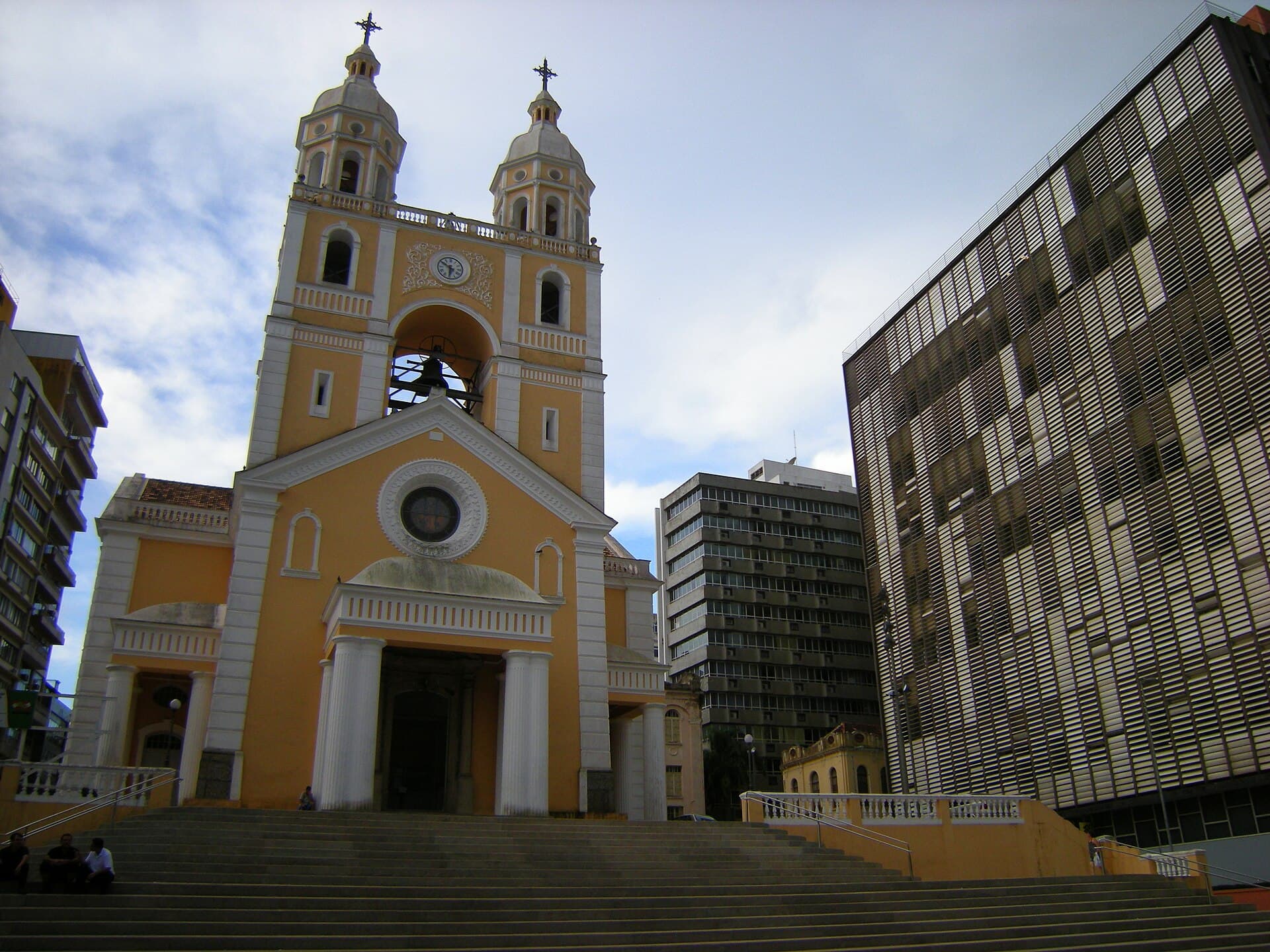
The short answer: Base in Florianópolis for the airport, city services, island beaches, and the cultural geography of Greater Florianópolis. Move to the south coast when Garopaba, Imbituba, Laguna, or the Baleia Franca protected area is the trip's central subject. Do not use one hotel for both areas until you have tested the return drive for the exact season and day.
Start with the Santa Catarina first-time travel guide for the full state decision. The Santa Catarina destination page connects that guide with this focused coast comparison.
Separate island geography from the state coastline
Florianópolis is both a city and a large island-plus-mainland travel problem. A beach on the north of the island, a cultural stop in the center, and a village in the south may all carry the same city label while requiring substantial movement. The south coast beyond Greater Florianópolis is another route again.
This means “stay in Florianópolis and visit beaches” is not yet a plan. Choose an island sector or central base according to the first activity on most days. Then decide whether a south-coast place deserves its own accommodation.
Use three route families:
| Route family | What it is good for |
|---|---|
| Central and mainland-facing Florianópolis | Arrival, public transport connections, markets, museums, and flexible weather alternatives |
| Northern or southern island base | Repeated time in one beach sector without crossing the island every day |
| Garopaba, Imbituba, or Laguna area | A separate south-coast stay tied to conservation, surf, fishing culture, or historic Laguna |
The right base reduces the number of days that begin and end in traffic.
Choose Florianópolis for a mixed city and island stay
Greater Florianópolis has more than beaches. IPHAN's 2025 listing dossier documents a group of Luso-Brazilian parishes across Florianópolis and Palhoça, connecting buildings and settlements in places including Santo Antônio de Lisboa, Ribeirão da Ilha, and Enseada de Brito.
That official framing offers a better route idea than driving to random viewpoints. Build one day around a specific settlement and its context. Confirm church or museum access, local events, public-space conditions, and whether an interior visit is appropriate. These are living places, not a themed set.
On a beach day, choose one shore sector after checking wind, sea, weather, lifeguard information, and access. Add a second beach only if the route is short and conditions suit both. A famous name does not override a warning flag or closure.
Florianópolis is also the easier choice when the stay falls directly before a flight. Protect that advantage by spending the final night within a transport plan you have checked, not at the far end of the island with an assumed drive time.
Move south when the protected coast is the point
The Ministry of Tourism's 2026 article on the Área de Proteção Ambiental da Baleia Franca describes a protected coastline that spans multiple municipalities, including part of Florianópolis and places farther south such as Garopaba, Imbituba, and Laguna. It also points to dunes, restingas, mangroves, lagoons, rocky shores, historic Laguna, and archaeological sites.
Those places should not become one day of pins. Pick a base around the activity you most want to understand. Garopaba or Imbituba can support a coast-focused stay. Laguna adds a historic urban chapter and a different onward position. Verify the current visitor information with the protected area's managing authority and the municipality.
Wildlife watching requires extra care. Seasonality, viewing areas, navigation, minimum approach practices, and authorized operations must come from the responsible environmental authority and a legitimate provider. Never treat the presence of wildlife as guaranteed, and do not pressure an operator to approach more closely for a photograph.
If no wildlife activity is available, the coast still has a planning purpose through beaches, settlements, protected habitats, and Laguna's history. Build that fallback before booking a nonrefundable outing.
Test the day trip before rejecting a second base
Calculate the full chain from the accommodation door to the chosen south-coast activity. Include the urban exit, road conditions, parking or drop-off, the activity's required arrival, and the return after weather or weekend traffic.
A day trip can work when one flexible activity is close enough for a comfortable return. It is a weak plan when the day contains a fixed boat departure, wildlife briefing, long trail, evening event, or another south-coast stop. In those cases, sleeping nearby may remove the most fragile road segment.
Before choosing a rental car, compare its full cost and operating requirements with an authorized transfer or current public connection. Check luggage, surfboard or equipment rules, child-seat needs, pickup points, and cancellation terms. This article has not evaluated a provider.
The return to the airport needs a separate decision. A south-coast final night can work when the live route and contingency margin are strong. Otherwise, return to Greater Florianópolis the day before flying.
Allocate useful days, not hotel nights
Two useful days support one Florianópolis sector plus a city or heritage day. Do not add the south coast unless the island is merely the arrival gateway.
Three or four useful days can support one island base and one flexible south-coast day. Move hotels only if the southern activity is fixed or you want more than a day there.
Five or more useful days make a two-base coast trip reasonable. Give each base at least one complete day beyond movement. Adding Serra Catarinense, Vale Europeu, or the northern coast creates a third route family and should be tested as another trip, not a quick detour.
Bad weather does not have to erase the schedule. Keep current museums, markets, heritage sites, and town walks as alternatives, while checking whether severe conditions also affect roads and public access.
Confirm conditions before committing
- Choose the island sector that serves most planned days.
- Check the live forecast and beach safety information by location.
- Verify cultural-site access through the responsible institution.
- Use the APA authority for current conservation and wildlife guidance.
- Confirm the complete south-coast transport in both directions.
- Put the final night where it best protects the flight.
- Recheck environmental, road, and civil-defense notices near travel.
This creates two clear options. Florianópolis is a mixed urban and island base. The south coast is a separate stay when its protected habitats, communities, and historic towns are the subject rather than an extra pin on the map.
Sources checked
Desk research only was used for this article. Stopover did not inspect beaches, wildlife tours, roads, or accommodations in person. The source check took place on August 29, 2026:
- Biodiversity of the Baleia Franca protected area, Ministry of Tourism. Used for the protected area's municipal span, ecosystems, Laguna context, and gateway framing.
- Listing dossier for Luso-Brazilian parishes in Greater Florianópolis, IPHAN. Used to frame Santo Antônio de Lisboa, Ribeirão da Ilha, and the wider settlement network as connected cultural places rather than isolated attractions.