

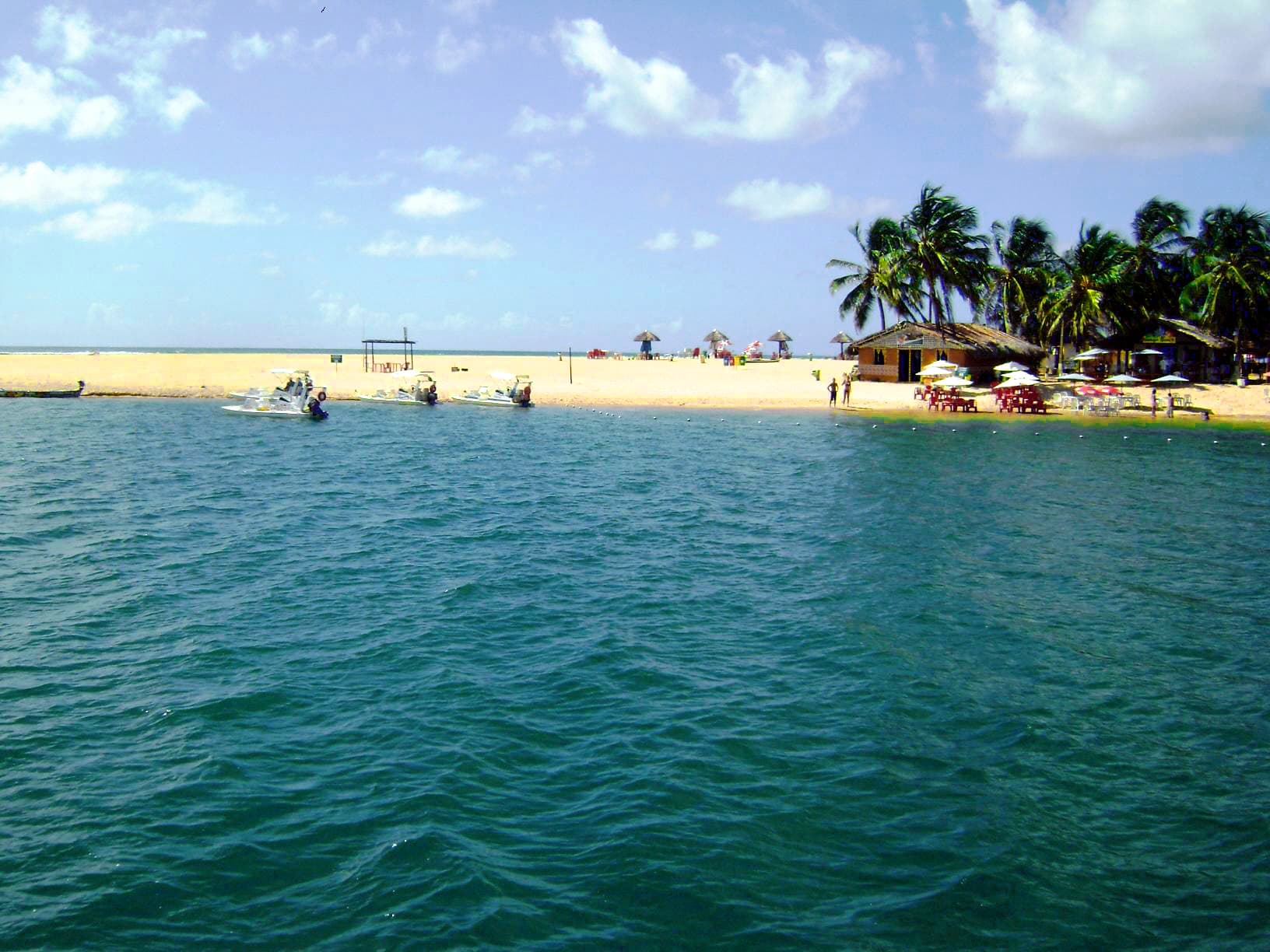
The short answer: Choose the town first, then check its current visitor rules and the tide window before reserving a boat. Maragogi, Paripueira, São Miguel dos Milagres, and other parts of the Costa dos Corais do not form one interchangeable attraction. Each departure has its own access, authorized operators, and local conditions. Keep one shore-based plan ready because wind, rain, visibility, or a changed departure can make the sea trip a poor use of the day.
This article handles one decision inside the broader Alagoas first-time travel guide. The Alagoas destination page collects both pieces so you can plan the state before choosing an excursion.
Pick the coast before picking the boat
Start with the place where you will sleep. A natural-pool booking should fit that base, not pull you across the state before dawn simply because two tours share similar photos.
Maceió works for travelers who want an urban base and the option to compare coastal outings. Paripueira lies north of the capital and has its own managed visitor activity. Farther north, São Miguel dos Milagres and Porto de Pedras suit a slower stay along the ecological route. Maragogi and Japaratinga make more sense when the far north coast is already the main destination.
The federal Costa dos Corais visitor-management page links the unit's current authorization material, rules, maps, and conduct guide. Use that page to identify the regulated area, then ask the operator which authorized departure and pool the booking covers. A label such as "Maragogi tour" is not enough. Record the beach, meeting point, vessel type, return point, and cancellation terms.
Read the tide as a booking condition
Reef visits are tied to low water, but a generic low-tide screenshot does not confirm a trip. Ask the operator which official reference port and date they use, what range they accept, and when passengers must report. Check the answer again close to the outing.
The ICMBio public-use plan for the Costa dos Corais describes natural pools and marine-manatee observation as regulated visitor activities and explains that daily limits are part of the area's impact management. That matters for travelers because a suitable tide does not create unlimited capacity. It also does not prove that every pool is open.
Build the day in this order:
- Confirm the exact calendar date and departure municipality.
- Obtain the operator's current tide reference and reporting time.
- Check whether the operator and vessel are authorized for that activity.
- Add the journey from your accommodation to the meeting point.
- Read the cancellation or rescheduling terms for weather and access changes.
- Keep enough time after the return so a late landing does not threaten a flight or long transfer.
Do not attach an airport departure to the same narrow window. The useful comparison is not the advertised time on the water. It is the complete movement from your room, through check-in and boarding, back to a reliable onward connection.
Check the operator without relying on a logo
An online listing, hotel referral, uniform, or social-media profile does not by itself prove current authorization. Ask for the operator's legal name and the authorization that covers the departure point and activity. Compare that information with the material linked by ICMBio. If the excursion includes diving, wildlife observation, or another regulated service, confirm that scope too.
Before paying, get written answers to these practical questions:
- Where exactly do passengers meet, and where does the trip finish?
- Is any road, beach, or shallow-water walk required before boarding?
- What equipment is supplied, and what must the traveler bring?
- How are children, non-swimmers, and travelers with mobility needs accommodated?
- What happens if the sea, visibility, or access changes?
- Does the payment include every transfer named in the description?
A responsible seller should be able to answer without replacing the details with promises about "perfect water." Visibility depends on more than tide height. Recent rain, wind, suspended sediment, and local decisions can change the experience.
Treat the reef as a protected place
The pools sit inside a federal environmental protection area, not an outdoor aquarium built for photographs. Follow the guide's route and the rules for the specific zone. Do not stand on coral, collect shells or animals, feed wildlife, leave rubbish, or pressure a guide to approach an animal.
Ask how flotation, footwear, sunscreen, and photography are handled in that location. Rules can differ by activity and zone, and product advice changes. The current unit guidance is more reliable than an old packing list. If a traveler cannot enter or leave the vessel safely, ask for the boarding setup before purchase instead of solving it at the water's edge.
The same restraint applies to manatee-related experiences. An animal sighting is never guaranteed. Choose authorized interpretation, accept distance and time rules, and avoid a seller that markets touching or chasing wildlife.
Keep a good land plan for the same base
A backup should still feel like part of Alagoas. In Maceió, keep an urban waterfront walk, museum, craft visit, or unhurried meal that does not depend on a boat. Around Porto de Pedras or São Miguel dos Milagres, plan a short village and beach day within confirmed public access. In Maragogi or Japaratinga, leave room for a calm shore day rather than replacing one cancelled vessel with another unverified seller.
The Ministry of Tourism's Maceió overview places the capital alongside the lagoons, nearby coast, and gateways farther north. Use it for geographic context, not live operating information. Museums, markets, public access, and bathing advice still need a same-week check with the responsible local authority.
This approach also protects the rest of the trip. If the boat is cancelled, you have not lost a prepaid cross-state transfer or rushed into a different marine activity without reading its conditions.
Use a final go or no-go check
Proceed only when the exact pool or activity, authorized provider, meeting point, tide reference, and return plan agree. Pause if the seller will not name the departure, cannot explain authorization, guarantees wildlife, or treats reef rules as optional.
Save the booking terms and the pages you checked. Reconfirm after heavy weather and before the free-cancellation deadline. If the outing still fits, place it on the best available coastal day and leave the next fixed transport outside its return buffer.
Sources checked
Desk research only; Stopover did not book, board, or test these excursions. No human or field review is claimed. Official pages were checked August 29, 2026:
- Ordenamento da Visitação | ICMBio; current Costa dos Corais links for authorizations, visitor rules, maps, and conduct guidance.
- Plano de Uso Público da APA Costa dos Corais | ICMBio; management context for natural pools, wildlife observation, visitor limits, and regulated services.
- Um pedacinho do paraíso chamado Maceió | Ministry of Tourism; geographic context for Maceió, its lagoons, and the north and south coasts.